I PREFER Julian Lloyd Webber’s Elgar Cello Concerto to Jacqueline Du Pre’s. And you can now get his noble performance without having Menuhin’s anaemic Enigma Variations, because it has been re-issued in a set of cello concertos. I have a soft spot for JLW’s Dvorak Concerto, too, and it is also now in better company than on its original CD. The other main works here are Tchaikovsky’s Rococo Variations and Saint-Saens’s A minor Concerto. The package also includes shorter works including Faure’s Elegie and Saint-Saens’s Allegro Appassionato and The Swan. The accompaniments are provided by various orchestras and conductors.
Julian Lloyd Webber is in persuasive form for this pleasant selection of short English works for cello and orchestra or piano, several of them associated with the cellist Beatrice Harrison, the Elgar concerto’s first and one of its finest exponents. Some of the pieces are arrangements. The Vaughan Williams Romance, for instance, is the slow movement of his Tuba Concerto (arranged by the composer), and it sounds even more smoothly lyrical on a stringed instrument.
Of two Elgar pieces, the Romance is also the composer’s transcription for cello of a work he conceived for bassoon. A Pastoral and Reel, written for Harrison by Cyril Scott, is a curiosity that requires panache to bring it off. Holst’s Invocation is one of his warmest and most melodic pieces, and there are items by Dyson and Grainger, plus two of the works the incapacitated Delius composed in 1930 with Eric Fenby’s co-operation. Lovely performances.
This album provides a companion to Julian Lloyd Webber’s much admired “Cello Song” a couple of years ago (10/93), and once again he has skilfully managed to choose a sequence of pieces that retains the same overall mood without monotony – though that consideration may in any case not much worry someone seeking late-night ‘easy listening’. This attractive disc actually begins with a piece by Lloyd Webber his first ever and written in 1992 for his six-week-old son David. Indeed, the inspiration for this whole album of lullabies is, he tells us, “the innocence of childhood” and the cellist also thinks it his “most personal recording”.
There are 21 tracks here and all are attractive music from, and for, a child’s world, though not everything is strictly speaking a cradle song. Lloyd Webber plays consistently with an ideal intimacy and care, and John Lenehan, who also composed the lullaby called Alice, is an excellent partner – though Richard Rodney Bennett and Pam Chowhan also participate in their own arrangements. The thoughtful and imaginative booklet- essay is on cradle songs generally and doesn’t attempt to deal with the individual pieces, but few purchasers of this disc will mind that. They will also not mind that the recording, close but not distractingly so, favours the lovely sound of Lloyd Webber’s cello. This attractive disc deserves to be very popular.
This ripe-toned assemblage of cello miscellanea celebrates Julian Lloyd Webber’s 15-year association with Philips Classics. Throughout this period, he’s made world-premiere recordings of over 50 works, and there are surprises amongst more familiar and populist fare here, too. The eloquent Rheinberger Cantilena (from Organ Sonata No. 11) is as compelling in this reworking as it is unexpected, while the Caccini and Glazunov works are encountered far less often than either deserves.
Otherwise, many of the usual favourites are included, though this excellent disc is not a compilation from previous Philips issues, but an entirely new programme taped only last year. Quite at home in lighter fare as in pivotal repertoire, Julian Lloyd Webber lavishes minute care over every detail in these accomplished and strongly idiomatic readings. With diligent and sympathetic orchestral accompaniments (principally from James Judd and the Royal Philharmonic) and a splendidly open and natural recording ambience, this is a far from run-of- the-mill collection. Recommended.
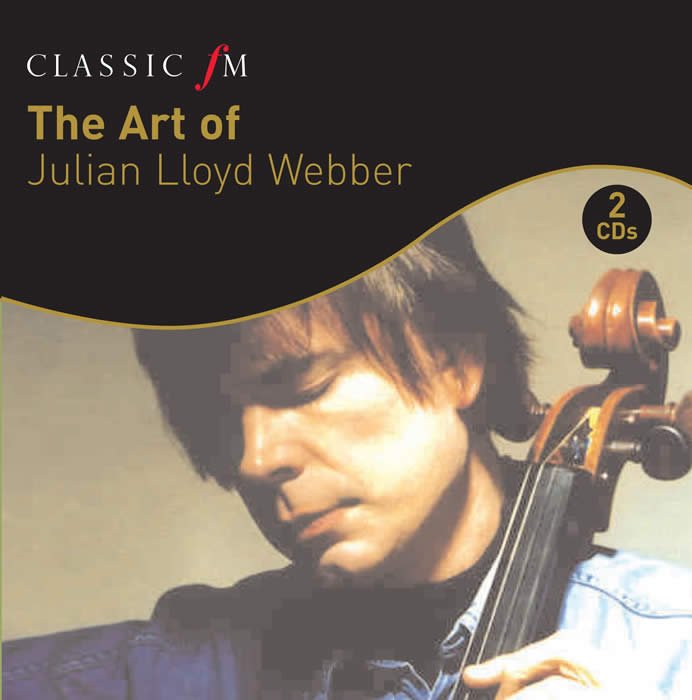
Many happy returns to one of British music’s finest. Cellist Julian Lloyd Webber celebrates his 60th on Thursday with a birthday concert at the Royal Festival Hall, London, a two-hour special on Classic FM and a two-CD retrospective, The Art Of Julian Lloyd Webber, which includes a charming, newly recorded novelty.
It’s a rarely heard Arioso for two cellos and strings by Gian Carlo Menotti dating from the Fifties, on which Julian is partnered by his wife, the Chinese cellist Jiaxin Cheng, who is expecting their first child soon.
But that won’t prevent her playing on Thursday at a gala that also features Julian in Elgar’s concerto, of which he is, in my view, the foremost living exponent, as well as in a new piece for cello by American choral composer Eric Whitacre, provided he’s actually finished it by then.
The violinist Tasmin Little, the soprano Danielle de Niese, jazz legend Cleo Laine and brother Andrew complete an all-star line-up, ringmastered by Melvyn Bragg, whose South Bank Show had as its signature tune a lively set of Paganini variations composed by Andrew and played by Julian.
I shall be presiding over the cutting of the cake at the party afterwards, because Julian has been a dear friend for many years.
But it’s for more reasons than friendship that I hail him today as a musician of real distinction. His Elgar recording, with Yehudi Menuhin, was chosen as the finest ever version by BBC Music Magazine. His Walton concerto was described by the authoritative Gramophone magazine as ‘beyond any rival’. Julian has also recorded a lot of neglected music, especially English pieces by the likes of Frank Bridge and John Ireland, that would have been forgotten but for him.
Sadly, neither of them features in the new Universal tribute album, but the 33 items included nevertheless span an extraordinary range, and this is a feast for cello lovers.
Julian has premiered more than 50 new works for his instrument, including a concerto by Philip Glass, given its first performance in Beijing, and a delightful late masterpiece from Joaquin Rodrigo, Concierto Como Un Divertirnento.
He is dedicated to live music, which is why he gives so generously of his time to chair the Government’s In Harmony programme, intended to emulate Venezuela’s El Sistema in giving underprivileged youngsters a chance to learn an instrument. Julian has never followed fashion, which is why he has played so much neglected music – and also accounts for his lifelong devotion to Leyton Orient.
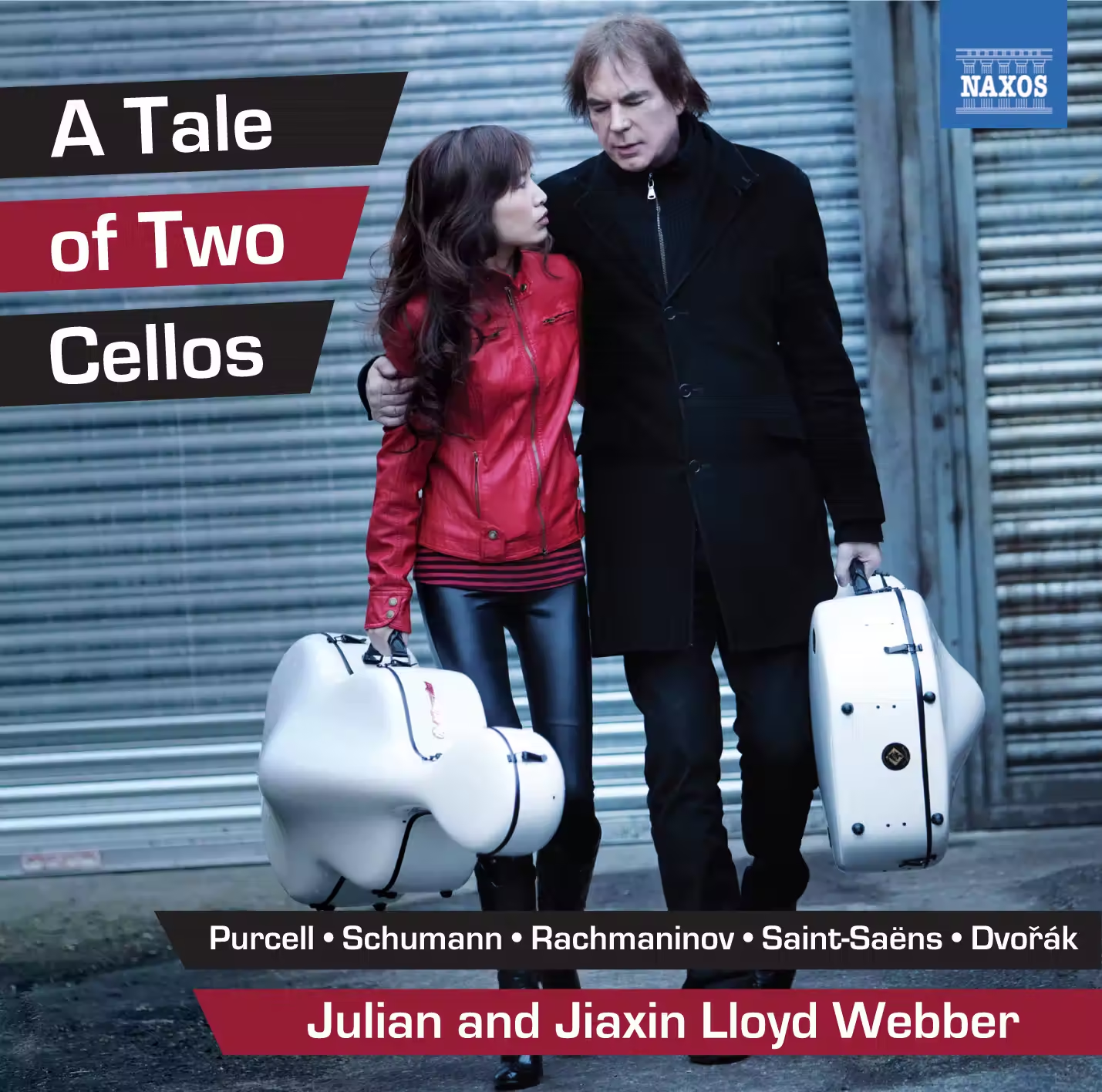
Review: Julian & Jiaxin Lloyd Webber – A Tale of Two Cellos, Nottingham Albert Hall
The name Lloyd Webber will always generate interest. Music runs in the family for Julian who is the second son of the composer William Lloyd Webber and piano player Jean Johnstone, and brother of Andrew Lloyd Webber. Now, alongside Shanghai-born wife Jiaxin Cheng, the Barjansky Stradivarius playing cellist has created something very special. The simply superb, heart warming sound created by the harmony of two cellos is impossible not to love.
Julian Lloyd Webber made his professional debut with the Cello Concerto by Sir Arthur Bliss at the Queen Elizabeth Hall in London in September 1972. Described by Strad magazine as ‘the doyen of British Cellists’ Webber is widely regarded as one of the finest musicians of his generation premiering more than sixty works for the cello.
Lloyd Webber’s most recent performance, ‘A Tale of Two Cellos’ at Nottingham’s Albert Hall was a fantastic varied musical journey spanning over three centuries, exploring over 20 flowing pieces which the pair had sympathetically transcribed for two cellos, blending harmonies with some unexpected surprises from Quilter, Dvorak, Gershwin, Purcell, Shostakovich, Rachmaninov and Vivaldi, a collection which suited many tastes.
Stand out pieces included superb arrangements of Piazzolla’s The Little Begger Boy and an exquisite Ave Maria by Saint-Saens with a doth of the cap to Father William and brother Andrew with Moon Silver and the stunning Pie Jesu. Wonderful piano accompaniment by Pam Chowhan enhanced the performance and throughout the well thought out programme of contrasting pieces Webber introduced with humorous delivery.
It is said that the cello is the closest instrument to the human voice. The two cellos harmonised beautifully creating a very special musical connection with Julian’s powerful strong bright sound against Jiaxin’s more mellow feminine style, the couple swapping instruments towards the end of the recital to see if the audience could tell the difference.
Concluding with an encore of the Everly Brothers’ All I Have to Do is Dream, the intimate low key evening of atmospheric pieces was a delight to listen to.
Concert Review: Julian and Jiaxin Lloyd Webber, Queen’s Hall, Edinburgh
Because the cello so closely resembles the human voice, natural choices were Rachmaninov’s chorus The Waves are Dreaming, Purcell’s duet Lost is my Quiet and Rubinstein’s song The Angel. But the couple also unearthed rarely heard gems such as Roger Quilter’s Summer Sunset, Piazzolla’s charming waltz The Little Beggar Boy and Arvo Part’s hypnotic Estonian Lullaby, complete with soporific bars of silence.
Although Julian plays a Stradivarius and Jaixin doesn’t, the combined cello sound is warm and seamless – even when they playfully swapped instruments in Joseph Barnby’s Sweet and Low.
Over the years, Julian has championed his father William’s music and the lilting Moon Silver is testimony to his great gift for melody. His brother, Andrew, demonstrates this too in his sublime 1982 tribute to their father, Pie Jesu.
Adding heft to the predominantly light repertoire were Julian’s spellbinding performance of Faure’s Elegie and Manuel de Falla’s dizzy Ritual Fire Dance, while Jiaxin delivered spirited versions of Bach’s Adagio in G and Prelude and Gigue from Cello Suite No.1.
Julian’s informal and witty introductions made for a relaxed and enjoyable evening.
Review: Julian and Jiaxin Lloyd Webber at St. George’s Hall, Liverpool
A Tale of Two Cellos It’s no secret music is a family affair for the Lloyd Webbers. Dad William was an organist and composer, mum Jean a piano teacher, while eldest son Andrew dabbles in the West End. Then there’s Julian, the Stradivarius-playing cello virtuoso and figurehead of the In Harmony project which has worked such wonders in West Everton.
The newest addition to the clan is Shanghai-born fellow cellist Jiaxin who married Julian Lloyd Webber five years ago. The couple are currently on the road with an intriguing new repertoire borne from looking for a project to do together.
They’ve taken all kinds of music, from Greensleeves to a Shostakovich film score, Vivaldi to Ireland, and Purcell to Arvo Part, and transcribed it for two cellos (hence the title) with a piano accompaniment, on tour played with lovely lilting serenity by Pam Chowhan.
Vocal duets of course work particularly well for this most human of instruments, Julian Lloyd Webber’s Strad a warm and mellow baritone and Jiaxin’s cello harmonising in bass-baritone fashion.
The cello also has a melancholic timbre which evokes images of a bygone Mittel-Europe, and which came to the fore in Rachmaninov’s The Waves are Dreaming, in the lovely, longing phrasing of Shostakovich’s Gadfly prelude, and, hopping continents, a waltz by Piazzolla which was a masterclass in musical storytelling. You could just imagine yourself in a late-night milonga.
Elsewhere the well thought out programme, interspersed with Lloyd Webber’s often humorous introductions, included Reynaldo Hahn’s If My Songs Were Only Winged, played with thoughtfulness and aching sweetness; a fierce de Falla solo from Julian and a chocolately Bach Prelude from Jiaxin; and the delightful and richly melodic Moon Silver, composed by William Lloyd Webber.
Julian Lloyd Webber & Jiaxin Cheng, Old Swan Hotel, Harrogate.
The Harrogate International Festivals’ first Spring Sunday Series coffee concert at the Old Swan Hotel, was a real treat. A wonderful performance by one of the world’s leading cellists – none other than Julian Lloyd Webber and his accomplished cello playing wife Jiaxin Cheng. Not forgetting Pam Chowhan on the piano. Wow!
It was to be a glorious musical romp through established cello pieces and other music, possibly written for the female voice, but this morning arranged, in most instances, for two cellos, but interspersed with the odd solo cello and solo piano! How to comment on 21 pieces of music, plus an encore? Not practical, so I will mention just a few of them.
As one might expect most of the items were relatively short otherwise you would have had great difficulty in packing so many pieces into two hours, including an interval. Summer Woods by Ireland was delightful, actually quite a well know piece, Prelude from Shostakovich’s The Gadfly had wonderful harmonies and was a change from The Romance, more normally heard. Bach’s Adagio in G, again well known and exquisitely performed. The Little Beggar Boy by Piazzolla written in memory of a beggar boy who used to come to a restaurant that he frequented, selling roses. The Harvesters by Dvorak – great fun. After the interval Jiaxin played solo Bach’s Prelude & Gigue from Cello Suite No. 1, she is a fine musician in her own right.
Julian Lloyd Webber introduced each piece, giving insights into the origin and the reason he had chosen it. At this point he lost his music, but opted to continue without any apparent problem, such is his ability. The next piece was a delightful play on words – entitled Lost is my Quiet, JLW commented it reflected his disturbed sleep pattern since the arrival of their baby two years ago.
Pam Chowhan was a superb accompanist with the ability to be quietly in the background, but yet a powerful player when the music so required. In this instance she played Rachmaninov’s No. 12 Prelude in G sharp minor with great sensitivity.
We moved on to the family music, as he described it with pieces by his father and famous brother Andrew, including Pie Jesu written in memory of their father’s death – an excellent composition and now very popular.
Humour returned as, for the next piece Sweet and Low by Barnby, they swapped instruments – Jiaxin playing Julian’s Stradivarius! – at the end of the piece she pretended not to give it back to him. For an encore we had a complete change to Bryant’s All I have to do is Dream popularised by the Everly Brothers.
I think this was one of the finest concert performances I have been lucky enough to enjoy, as I know the audience did. The musicianship was beyond criticism. Julian Lloyd Webber did us proud and we loved it.
Review: Julian and Jiaxin Lloyd Webber at Bramall Music Building, Birmingham
Cellist Julian and wife Jiaxin must have had an interesting time choosing a programme to suit the many tastes anticipated. With confident support from pianist Pam Chowhan more than 20 pieces covered a wide time–scale with some charming arrangements of songs and interestingly adjusted works for the three musicians.
Father William and brother Andrew both featured with heart stopping sonorous works:Moon Silver, Pie Jesu – truly lovely.
It is said that the cello is the closest instrument to the human voice, so with A Tale of Two Cellos Mr and Mrs sang musically throughout with true togetherness.


 Classic CD July 1999
 Mail on Sunday April 10th 2011