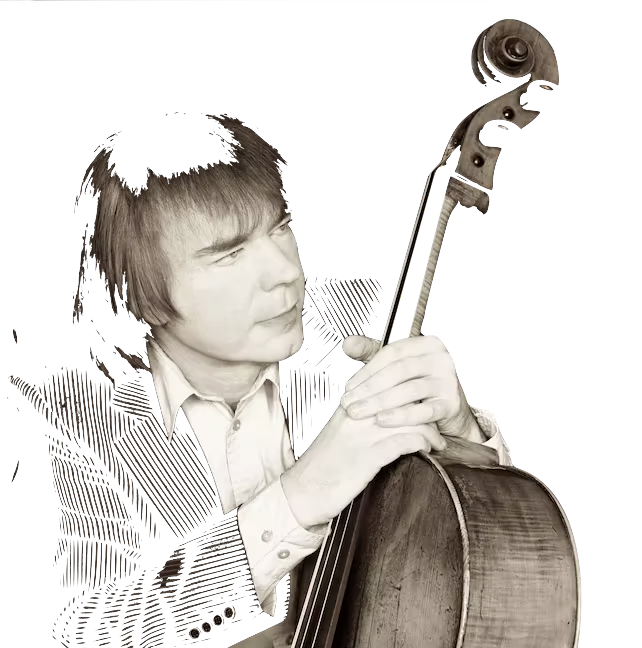

Who would want to be in Roger Wright’s shoes? Mr Wright basks in the delightfully old-fashioned title of ‘Controller, Radio 3’- which conjures up visions of an elderly gentleman, feet up on his vast desk, whimsically picking up programmes and moving them around his network rather like the Fat Controller manoeuvred his trains in Thomas The Tank Engine.
In reality if the Controller, Radio 3, so much as queries a quaver there is immediate discord and a tidal wave of listeners bombarding the BBC website with accusations of “vandalism”.
The most recent furore – sparked by the evening concert being moved back half an hour from 7.30pm to 7.00pm – found me delving into a thirty year old issue of Radio Times to discover what has really changed.
The first thing that struck me was how much more central classical music was to our everyday lives. Back in 1976 there were only three TV channels yet both BBC 1 and BBC 2 regularly showed classical music related programmes. Can you imagine BBC 1 screening a 45 minute peak-time feature on composer Luciano Berio today? Neither can I. Right now even BBC 2’s supposed ‘Culture Show’ pays about as much attention to classical music as the average episode of Eastenders. Thirty years ago, of course, the final of the BBC’s ‘Young Musician of the Year’ competition would attract 20 million viewers. Now the earlier rounds have been marginalised to BBC 4 the figure has plummeted to nearer 1 million.
My ‘76 vintage Radio Times also featured a giant crossword based on clues to be revealed during Joseph Cooper’s long running (and immensely popular) series Face the Music. And – believe it or not – the same issue’s lead letter concerned a performance of Michael Tippett’s First Symphony.
According to those self-styled ‘defenders of the faith’, Friends of Radio 3, the station’s “emphasis on pop and younger audiences is an attempt to compete with commercial rivals” – by which, of course, they mean Classic FM. But is there really less classical music on Radio 3 than before? Actually, there is far more. In 1976 the network shut down at 11.30pm whereas now it plays intriguing (often lesser known) music throughout the night which I wish Radio Times would detail more thoroughly. The most noticeable – and welcome – thing about Radio 3 is how little it has changed especially in comparison with other BBC stations. Radio 2, for example, long ago swapped its mix of ‘easy listening’ and ‘light classics’ for a diet of Adult Orientated Rock. As a result it is now the UK’s most listened to radio station. But – by vacating the middle ground – the BBC left an open door for Classic FM to become the UK’s most successful commercial radio station. It would not surprise me to see Classic FM’s new sister station, theJazz – which launches nationally on Christmas Day – score a similar ratings success.
Jazz is a musical genre that the BBC always seems to have trouble placing. Like World Music, it does not fit comfortably on Radio 3 and it is hard to escape the feeling that there are those in the BBC hierarchy who view the station as a convenient home for anything vaguely unpopular which can’t be housed elsewhere. If I had a personal criticism of Radio 3 it would be that its wide ranging cultural remit is too broad: you never quite know what you are going to get when you switch on.
Roger Wright – a classical man to his fingertips – is doing a great job fighting classical music’s corner yet if the BBC can create a minority 24 hour station (1Xtra) for ‘urban and hip-hop’ surely they could find room for a 24 hour classical station? It would certainly make the Controller, Radio 3’s job a good deal easier.