
Guardian 4th February 1980
QEH
If ever a cello sonata asked to be turned into a concerto, it is the magnificent C minor work which Rachmaninov wrote at the very peak of his powers in 1901 at the same time as the Second Piano Concerto. It is not that it would necessarily sound better with the cello accompanied by an orchestra instead of a piano, but that in essence it is a piece on an epic scale demanding virtuoso playing of uncompromising power.
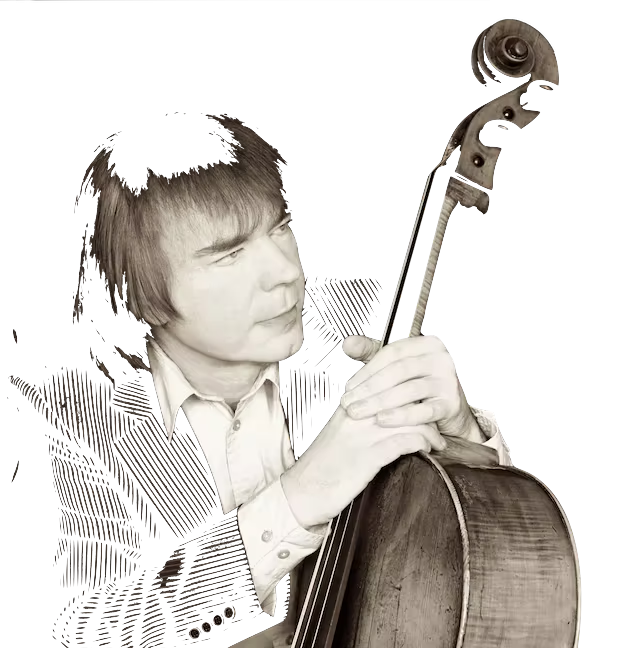
That is just what Julian Lloyd Webber provided in a fine performance at the Queen Elizabeth Hall. He has already recorded the work with this same pianist, Yitkin Seow, and the pity was that in this instance the support, refined and confident as it was, seemed too self-effacing. So often in cello sonatas the piano tends to swamp the cello, however positive the player but here was the opposite phenomenon.
It is a work which against the usual rules gets even finer as it progresses, with one of the most heart-easing of Rachmaninov’s melodies in the slow movement leading to a finale exuberant in its optimism rare thing with this composer. For encore the slow movement was played again, and seemed all the more moving a second time.
Lloyd Webber’s strength as a cellist, his natural compulsion lies very much in his ability to phrase with soaring spontaneity and imagination. The Rachmaninov performance made a fitting climax to the programme – which he and Mr. Seow are now taking to Carnegie Hall in New York – but in Debussy and Britten, too. Lloyd Webber took on the role of surrogate composer, not in any excessive freedom but in the feeling of improvisation, very apt when both composers work from fragmentary material.
The Britten brought a performance more introspective, less obviously weighty than that of the dedicate Rostropovich, and the echoes of Soviet music were less sharply defined but the playing was equally full of fantasy.
Edward Greenfield