
The Irish Times 24th April 2004
Haydn Cello Concerto Review
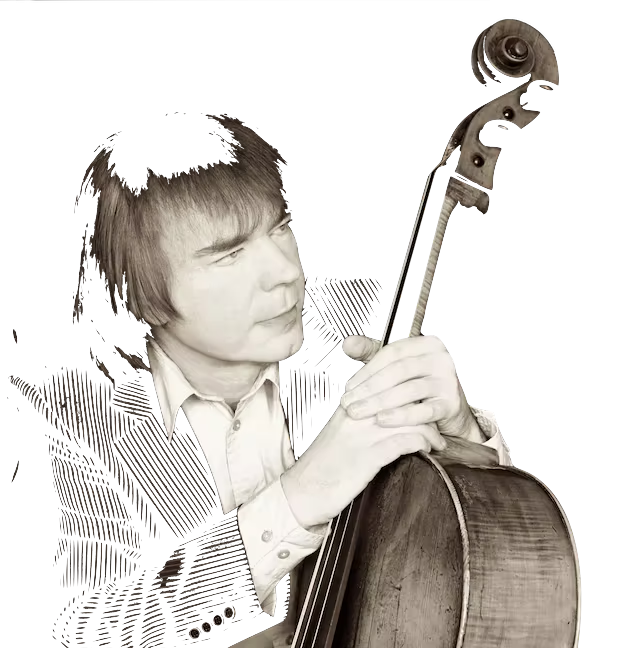
Julian Lloyd Webber,
EUCO/Sussmuth
Mahony Hall. The Helix, Dublin
Michael Dungan Haydn Symphony No 67 Cello Concerto in C
It is a sweet paradox for an ensemble with a name as ungainly as the European Union Chamber Orchestra to play with such rarefied, ensemble, balance, and flair.
The orchestra’s clean, energy-filled sound was immediately and winningly apparent from the very first bars of Haydn’s Symphony No 67, the opening work in this instalment of the international Concert Series at The Helix. The high-calibre players just 15 strings pius pairs of oboes, bassoons and horns – brought a zesty freshness to the rhythmic high spirits of the first movement.
The Symphony No 67 has special treasures. These include the third movement Trio’s rustic, almost ghostly bag-pipe drone – an effect Haydn created by mistuning the G-string in the second violin part – and the slow, three-voice chamber music section which appears out of the blue in the middle of the finale.
It’s not often that a concert’s opening item becomes its highlight, but that’s what happened on this occasion.
Much credit rests with leader Gernot Susarnuth. His sprightly direction – especially here and in Mozart’s Symphony No 33- generated a nimble energy and the kind of focused dynamic control more easily attained by a conductor, The small scale of the accompanying orchestra and the clarity and range of the Mahony – Hall acoustic created the ideal conditions for Julian Lloyd Webber, soloist in Haydn s Cello Concerto in C.
His playing was tasteful, the sound always true, arid he surmounted the finale’s virtuosic challenges with apparent ease.
Elgar’s early and romantic Serenade for Strings (a change from the advertised programme) received a low-calorie performance given the small forces. Even if a bit thin, however, the sound had a pleasantly alternative appeal courtesy of the evening’s otherwise 18th-century aesthetic.
Michael Dungan