
Gramophone September 2004
Glass
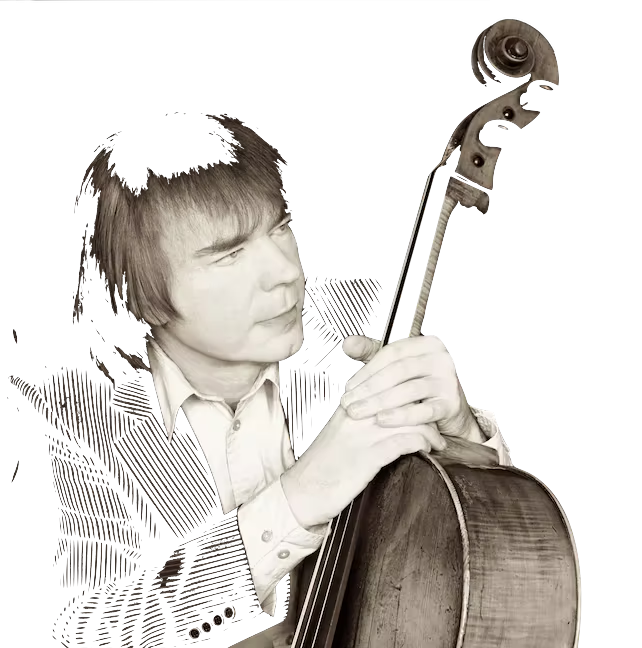
Julian Lloyd Webber, cellist; Evelyn Glennie and Jonathan Haas, timpanists; Royal Liverpool Philharmonic Orchestra, conducted by Gerard Schwarz.
Orange Mountain MUSiC 0014; CD
The Concerto Project Volume 1
Cello Concerto. Concerto Fantasy for two Timpanists and Orchestras
Julian Lloyd Webber (vc), Evelyn Glennie, Jonathan Haas perc,
Royal Liverpool Philhamonic Orchestra/ Gerard Schwarz.
Orange Mountain Music OMMOO14 (45 minutes DDD)
Music both engaging and exciting as Glass puts his top soloists through their paces
The Cello Concerto was conceived when Julian Lloyd Webber asked Glass to compose a work for the cellist’s 50th birthday. Lloyd Webber says the piece, premiered in October 2001, contains technical hurdles he had not seen before in particularly in the opening cadenza, but for the listener it’s not a difficult work. That cadenza, underpinned by muffled, percussive figures from the orchestra, is dramatic, with an undercurrent of ambiguos emotion. but it is also lithe aid attractive, evocative of the classics of cello literature— tore, nor least Bach and Elgar. After about. 320″ the orchestra introduces brighter textures and typical Glass motifs.
There are passages where the debate between orchestra and soloist seems to contrast those often—copied, easily parodied Glass mannerisms with his more melodically arid harmonically expansive work of recent years. The result is one of the most engaging, impressive and beautiful things Glass has done. The slow movement, lyrical and graceful, sets us up perfectly for the shock of the opening of the finale, which bursts in with one of those ‘accelerating train’ episodes Glass does so effectively.
The gestation of the timpani concerto was more problematic. I can sympathise with Glass’s hesitations. Despite its tuneful capabilities, I associate timpani primarily with melodrama and bombast and, while Class has never been averse to those characteristics, timpani still isn’t an ideal choice for a concerto solo instrument. There are 14 of them here, presumably due to the need to negotiate fairly rapid movement through different keys.
It all works remarkably well in the event. The fast first movement has exciting, ritualistic solo par, perhaps influenced by South-East Asian and Japanese traditions The slow movement manages to make the drums sound lyrical embedded in settings of regal brass and pastoral woodwind. the cadenza preceding the third movement, highly athletic as it is, proves to be a warm-up for Evelyn Glen me and Jonathan Haas before the technical tour dc-force of the finale.
Barry Witherden